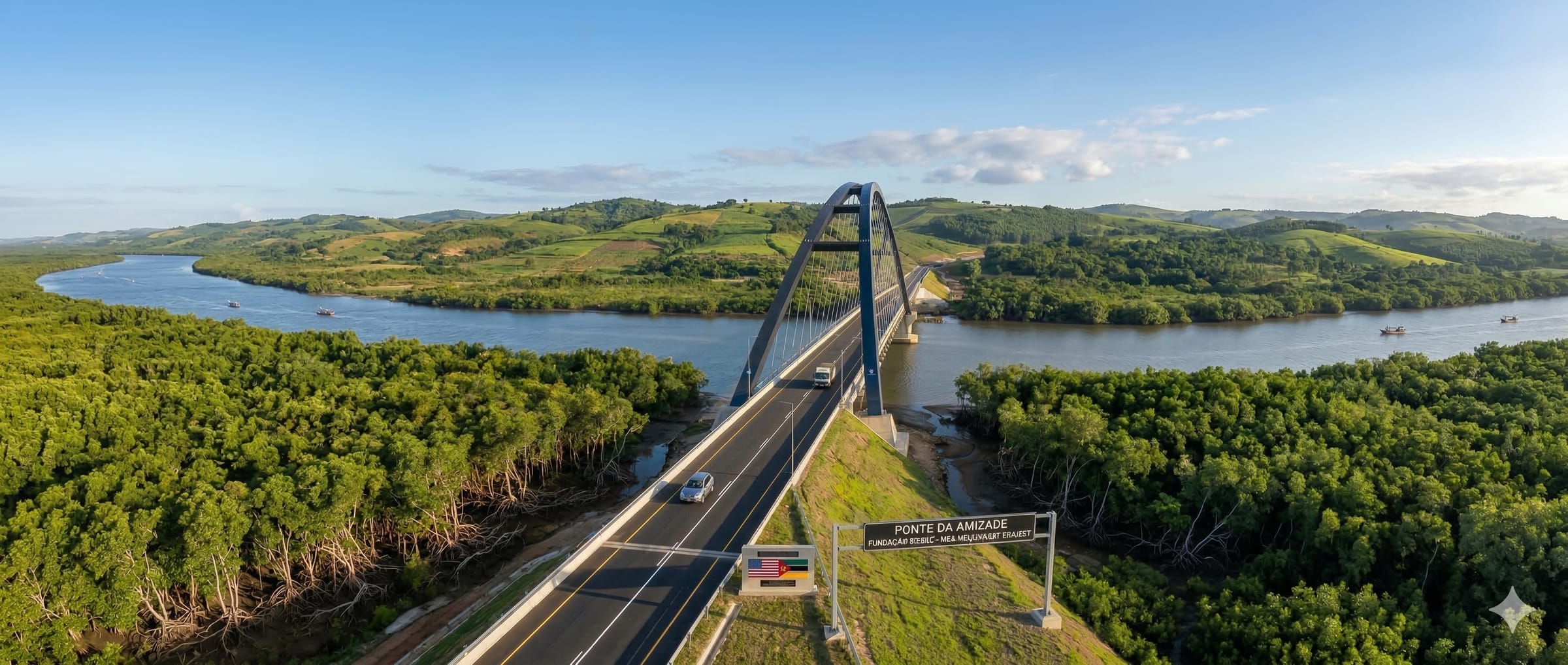
Licungo Bridge and Mocuba Bypass
Construction of a new bridge and bypass road for climate resilience and congestion reduction.
Objective
To enhance connectivity and resilience of the N1 road.

Sub-projects
The following three (3) activities correspond to CTR subprojects:
Construction of a new bridge and bypass road for climate resilience and congestion reduction.
Objective
To enhance connectivity and resilience of the N1 road.
Improvement of arterial and secondary roads, including upgrading, rehabilitation, and maintenance.
Objective
To improve access to district capitals, markets, and social services.
Ensure support for (a) improving the existing road maintenance financing system to benefit from increased funding, (b) implementing road asset management in Zambézia, and (c) enhancing women's access to and benefits from transportation services.
Objective
To increase funding for road maintenance, improve institutional performance, and promote social inclusion.
CTR
Designing a reliable climate-resilient infrastructure (e.g., Licungo Bridge with a safety margin above flood levels).
Using economic and social criteria for road prioritization;
Providing technical assistance to improve funding mechanisms and road asset management systems.
Incorporating stakeholder engagement, including women and excluded groups, into road management.
Key Outcomes
57.4
million
Beneficiaries
Approximately 57.4 million people overall.
Increased road maintenance funding and institutional efficiency;
Improved performance of the classified road network;
Enhanced mobility and economic empowerment for women and excluded groups.
Reliable and sustainable infrastructure.
Cross-cutting
The CTR Project includes measures to mitigate environmental and social impacts, such as:
The project emphasizes addressing gender barriers, such as:
Construction activities may exacerbate trafficking risks and road safety concerns, including:
The CTR Project incorporates biodiversity offsets and sustainable practices, such as:
Climate adaptation strategies include:
The project seeks to:
Partnership